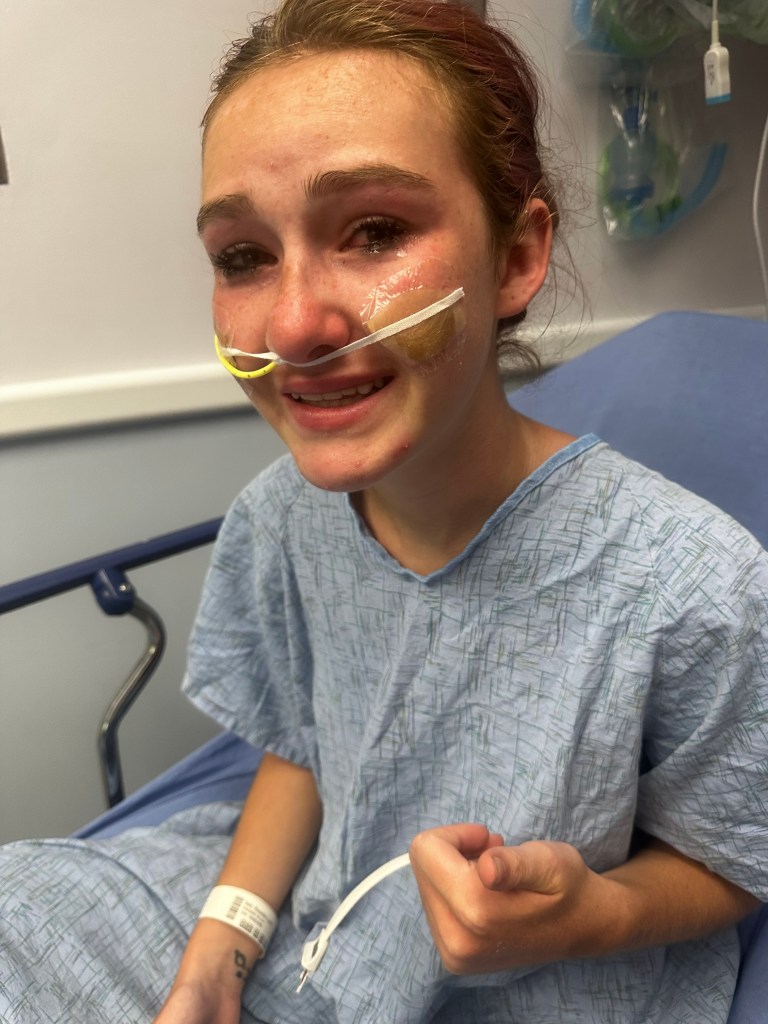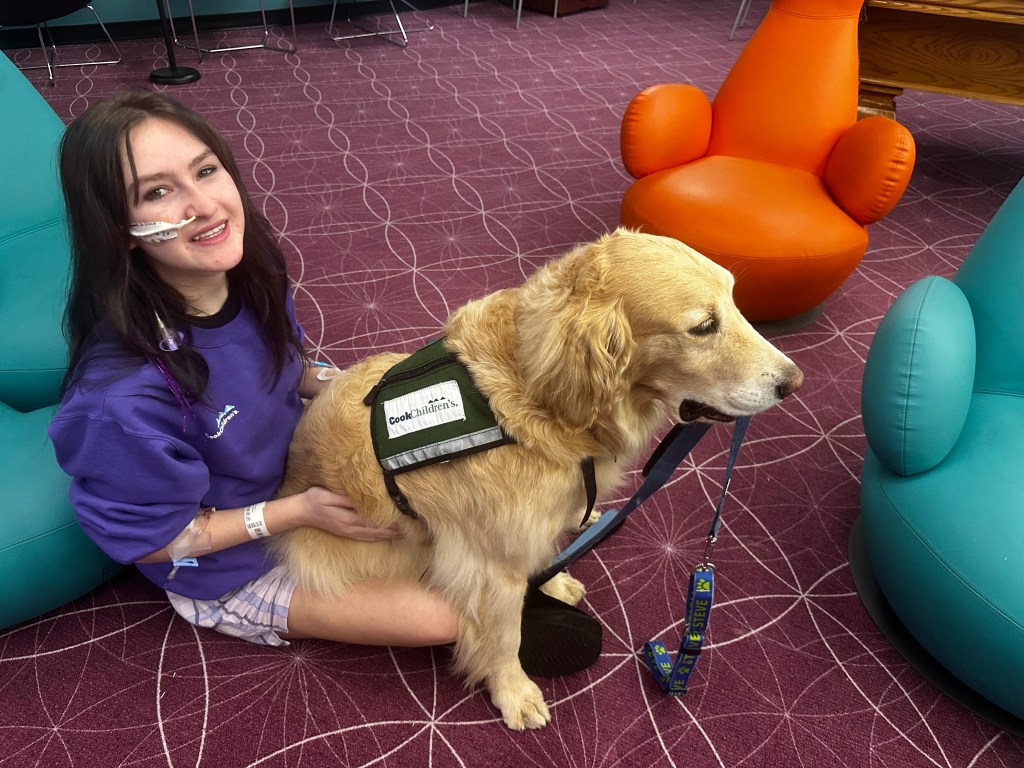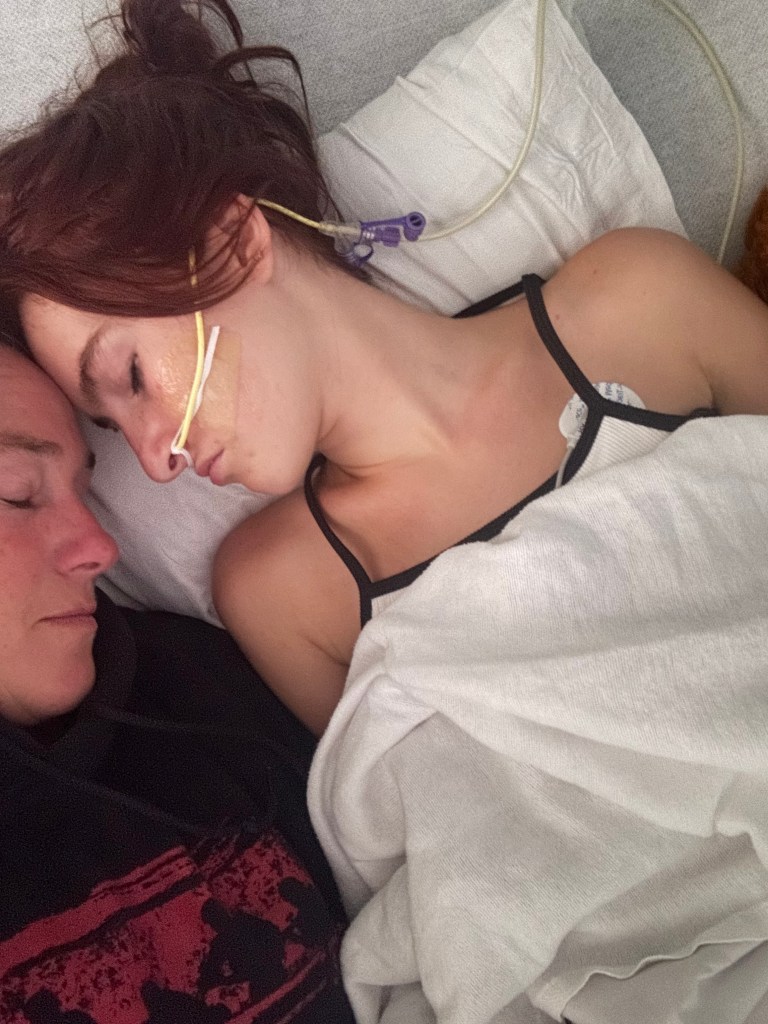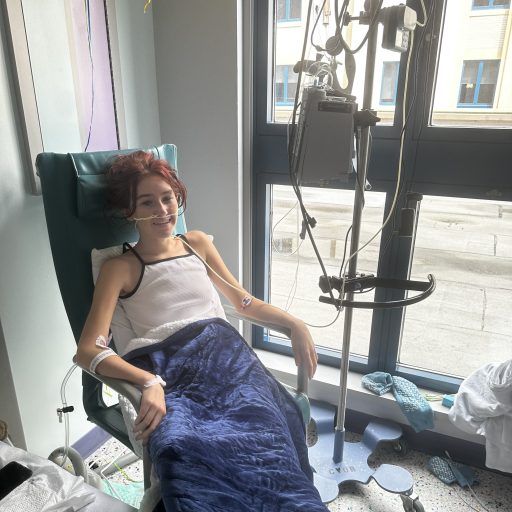
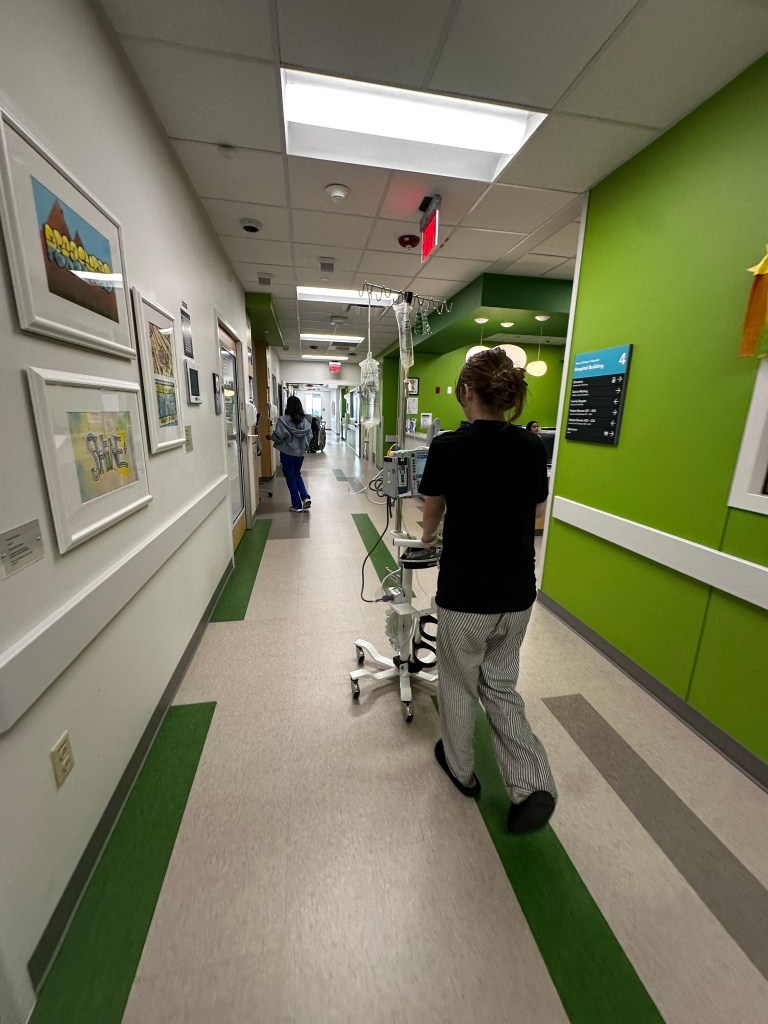
• Home from the hospital tonight.
    We’re starting a whole new journey. It seems like every time one compression is fixed, another one shows up — this time, it’s her Nutcracker Syndrome.
    Basically, her left renal vein is being compressed, which causes a lot of pain and other symptoms. We’re now starting with a new team of doctors to figure out the best plan going forward. Her SMAS surgeon has referred us to a vascular surgeon, and we already have a few others we want to see as well.
    For now, Rowdie is back on her feeding tube to help supplement her nutrition since she isn’t able to eat much by mouth right now. They’ve also sent us home with some things to help manage her pain.
    This is another chapter in her fight — and we’ll face it the same way we always do: together, one day at a time. 💜
    What is Nutcracker Syndrome?
    Nutcracker Syndrome happens when the left renal vein — the vein that drains blood from the kidney — gets squeezed between two major arteries, kind of like a garden hose being pinched shut.

    Because that vein is compressed, blood can’t flow out of the kidney the way it should. This causes pain in the side, back, or lower belly, and sometimes pelvic pain, nausea, or blood in the urine.

    It’s called “Nutcracker” because the vein gets caught between the arteries the same way a nut gets caught in a nutcracker.
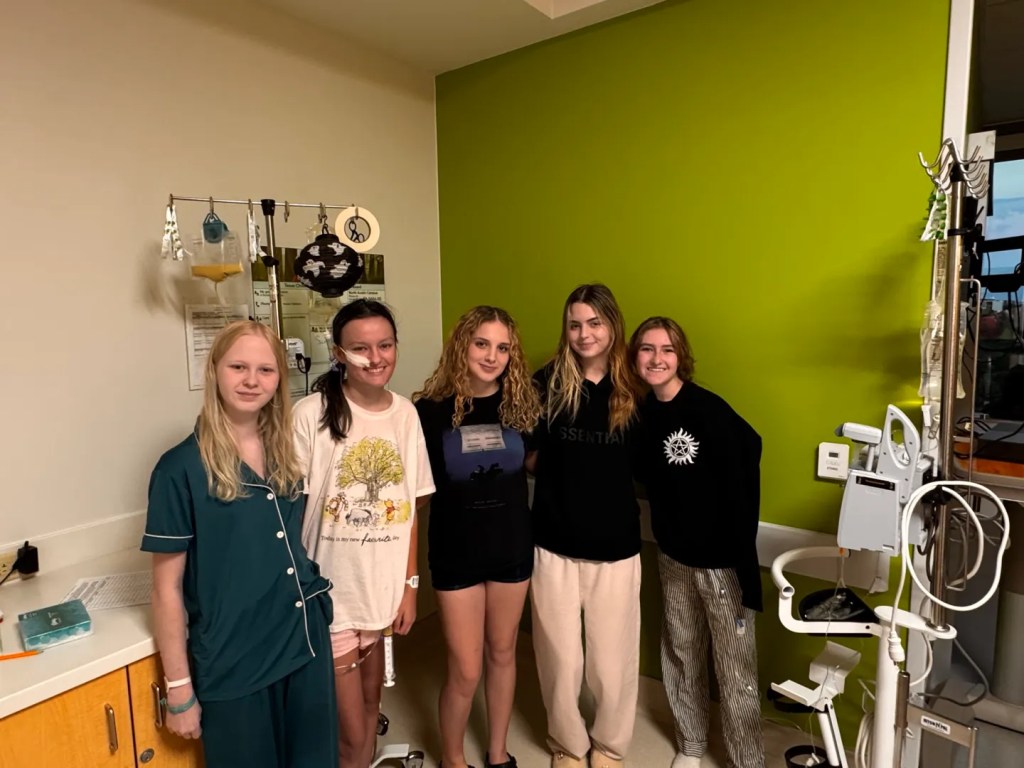
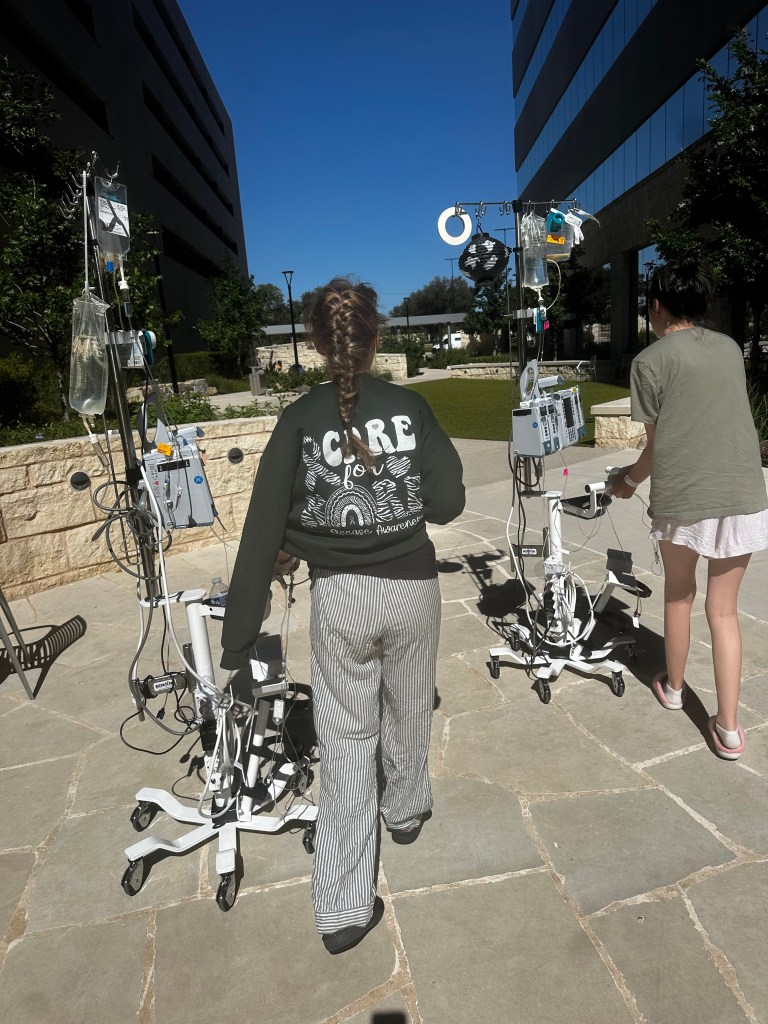
  • 💜 This picture is full of Warriors 💜

    Every single one of these girls is fighting SMAS — each with her own unique story, her own struggles, and her own incredible strength. All of them have either recently had or are here having SMAS surgery, the same one Rowdie had back in July here at Texas Children’s Hospital in Austin.

    Different journeys, but the same fierce fight against this rare condition. These girls are truly badass warriors — brave, strong, and resilient beyond words.

    We are beyond blessed to have such an amazing SMAS community — one that comes together in love, support, and understanding. Watching the girls bond, and the moms connect through shared strength and hope, is something truly special.

    Here’s to all of these incredible fighters and the families standing beside them. Together, we are stronger. 💪✨

  • That sinking feeling in your stomach… the one that hits when you just know your kid is starting to suffer again. The signs are there — the pain, the exhaustion, the look in their eyes that tells you something isn’t right. And as a mom, you just know.

    Tomorrow, we head back to the doctor. Another long 3-hour drive to see her specialist. Tonight, I’m packing the hospital bag — because at this point, it’s second nature. It’s that “just in case” bag that never gets fully unpacked. It’s a mix of fear and preparation, because if you’ve lived this life long enough, you know how quickly an appointment can turn into an admission.

    It’s like a form of PTSD — every time we walk through those hospital doors, my chest tightens. I’ve lost count of how many times we’ve walked in thinking it would be a quick check and walked out weeks later, drained and exhausted. So now, I pack. I prepare. I brace myself.

    The life of a medical mom means always being ready — for the worst, for the unknown, for the next round of pain your child will have to fight through. It’s a life of constant vigilance, but also constant hope.

    Tonight, the bags are packed. ✅
    Tomorrow, we make the drive.
    And tonight, we pray.

    Pray for answers.
    Pray for strength.
    Pray for peace — whatever tomorrow brings.

  • Today marks 12 weeks since Rowdie’s SMAS surgery (Alvear-Fowlkes-Stephenson procedure) at Texas Children’s Hospital in Austin, TX — and what an incredible 12 weeks it’s been. 💛

    She is officially 8 weeks tube-free after being on a feeding tube for over a year — and she’s gained 11 pounds since surgery! 🙌

    Of course, healing from such a major surgery takes time. She still has a little abdominal pain here and there, and she gets fatigued some days (especially with this Texas heat 🌞). She’s needed a few rounds of extra IV fluids since being home, but overall, she’s doing amazing.

    Tomorrow, she heads back to work — something she’s beyond excited about! It’s been such a long road, but seeing her getting back to a more “normal” life again is everything. 🥹

    To all the SMAS warriors and families out there — if you’re waiting to get in with one of these incredible surgeons, please have patience. They’re doing the very best they can, and I promise, they are worth the wait.

    We’re so grateful for the choices we made and for the amazing care that’s helping our girl finally feel better. Sending love to all of you fighting similar battles — you’re not alone. 💛

    #SMASAwareness #VascularCompressionSyndromes #HopeForHealing #RowdieStrongh#FightLikeRowdie

  • The pain, the tears, and the smiles hiding it all
    By Kristie Fettig

    People often see the smiles in the photos — the brave little girl with bright eyes, the mom holding it together, the family doing their best to make life look normal. But what they don’t see is the raw side of rare.

    They don’t see the pain. The tears. The nights spent sitting on the bathroom floor, holding your child as they cry because their body is hurting again — and you have no way to fix it.

    They don’t see the exhaustion that comes from watching your child fight a battle no one can name. The endless appointments, the blood tests, the waiting rooms filled with hope and fear all tangled together.

    They don’t see the frustration when yet another doctor says, “Everything looks fine.”
    Because it’s not fine.

    Behind every rare disease diagnosis — or in our case, the lack of one — there’s a story of invisible pain and unspoken strength. There’s a child who’s learned to smile through discomfort because it never really goes away. And there’s a parent who has to smile too, even when they want to scream.

    There are days when you feel broken — when you’d give anything to trade places, to take the pain yourself. Days when you question everything.
    And then, there are moments of pure light.

    A genuine smile. A good meal. A pain-free day.
    Those are the moments that keep you going.

    Because even in the rawest parts of this journey — the fear, the uncertainty, the helplessness — there is still so much love. There is resilience. There is faith. There is a quiet kind of joy that only comes from fighting through the hard days and finding beauty in the small wins.

    The raw side of rare isn’t glamorous. It’s not what people post about on social media.
    It’s messy, emotional, and often lonely.
    But it’s also real — and it deserves to be seen.

    So here’s to all the families living in the raw side of rare.
    The ones holding it together with love, tears, and hope.
    The ones smiling through the pain, not because it’s easy — but because their child deserves to see that even in the hardest days, there’s still light.

  • Raising a child is never simple — but raising a child with a rare disease changes everything you thought you knew about parenting.

    It’s doctors instead of playdates.
    Hospitals instead of parks.
    Questions instead of answers.

    When you’re the parent of a “rare disease girl,” life feels like living in two worlds. On one side is the normal childhood every parent dreams of — birthday parties, sports, sleepovers, and growth charts that make sense. On the other side is the world of medical terms, appointments, insurance battles, and a kind of exhaustion that no amount of coffee can fix.

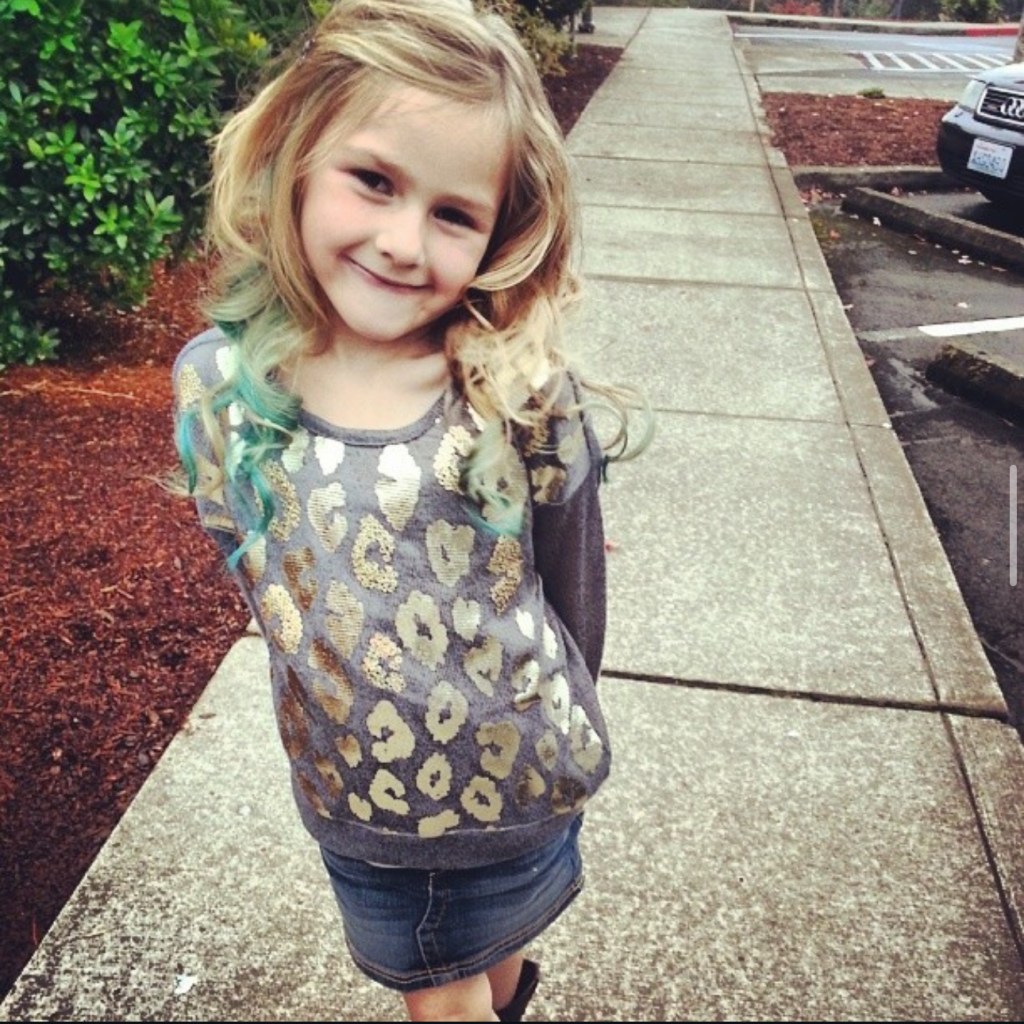
    For me, that world began when Rowdie was barely two years old. Stomach pain, nausea, and vomiting became part of her daily life. She would nibble on food and push it away, whispering that her tummy hurt. She wanted to eat — she just couldn’t. Watching your little one refuse food not because she’s picky, but because it hurts to eat, is a heartbreak that words can’t really capture.

    Doctor after doctor, test after test, and still no answers. “Everything looks normal,” they’d say, while my daughter cried in pain.
    But how can everything be normal when your child is shrinking before your eyes?
    How can everything be fine when she’s falling off the weight charts?

    This is what it’s like to raise a child with an invisible, rare illness — you become both caregiver and detective. You learn medical jargon, keep detailed notes, and memorize every reaction, every symptom, every small change. You become the voice that won’t stop asking “why” when everyone else has stopped looking.

    You also learn strength you didn’t know you had — and so does your child. Rowdie is the bravest little girl I know. She’s learned to smile through pain, to laugh in between tests, and to find joy in the smallest things. Her resilience reminds me daily that she’s more than her diagnosis — or lack of one.

    Raising a rare disease girl means living with uncertainty, but also with extraordinary love. It means celebrating the smallest victories: a good meal, a pain-free day, a doctor who finally listens.

    It’s not the journey I imagined, but it’s the one that has taught me more about courage, faith, and compassion than I ever thought possible.

    If you’re another parent on this road — lost in the “rare” world, searching for answers — know this: you’re not alone. Your fight matters. Your child’s story matters. And even when it feels like no one sees what you’re going through, there’s a whole community of us out here walking the same path.

    Together, we can make the rare a little less lonely.

  • When you become a parent, you expect scraped knees and colds — not endless questions without answers. But when your two-year-old starts clutching her stomach after eating, saying, “My tummy hurts,” you know something isn’t right.

    That’s how it began with Rowdie. Just two years old and already in pain every time she ate. At first, it seemed like toddler pickiness — until it wasn’t. She would nibble, take a few bites, and then stop. Meals became battles, not because she didn’t want to eat, but because she couldn’t.

    Why does her stomach hurt so much when she eats?
    Why does she throw up afterward?
    Why does she refuse food when she’s clearly hungry?
    And why is she so much smaller than the other kids her age?

    The doctors noted she was at the very bottom of the weight chart. “Just let her eat more,” they’d say. But what if she can’t eat more? What if eating is what’s making her sick?

    We’ve seen countless doctors — pediatricians, GI specialists, and every referral imaginable. Test after test, scan after scan. Yet every result came back “normal.” No clear diagnosis. No clear path forward. Just more questions.

    So we live in this space between what’s seen and what’s invisible. Between what’s “normal” on paper and what’s not normal in daily life. Between reassurance and frustration.

    Over time, Rowdie has learned to live with her pain — something no child should ever have to do. She thinks it’s normal for her stomach to hurt. She’s used to it. And that’s the part that breaks my heart the most.

    How did we get here?
    We got here through years of unanswered questions, through persistence and prayer, through refusing to stop asking why. Because invisible doesn’t mean imaginary. And no child should have to live in pain just because their illness doesn’t show up on a test result.

    This is our story — not for sympathy, but for awareness. Because somewhere, another parent is watching their little one push away food, wondering the same questions we did.

    And maybe, by sharing Rowdie’s story, we can help make the invisible a little more seen.

  • Welcome to The Raw Side of Rare. I’m Rowdie’s mom — a medical mom, advocate, and storyteller navigating life through rare chronic battles. This space was created to share the honest, unfiltered side of our journey — the tubes, the tears, the triumphs, and everything in between.

    For years, our world has revolved around hospital halls, specialist appointments, and the endless hope for better days. But beyond the diagnoses and procedures, there’s laughter, strength, and love that keeps us moving forward.

    Through The Raw Side of Rare, I hope to connect with other parents walking similar paths — those who understand what it’s like to fight for your child’s health while trying to hold everything else together. This isn’t just our medical story; it’s a story of resilience, faith, and the power of a mother’s love.